AI Marries Private Equity—Silicon Valley Just Cloned China’s Outsourcing Playbook
Silicon Valley’s “high-minded” coup ends up as outsourced body-shopping?
OpenAI spent a lousy $500 million and walked away with a shell worth tens of billions. What kind of sorcery is this?
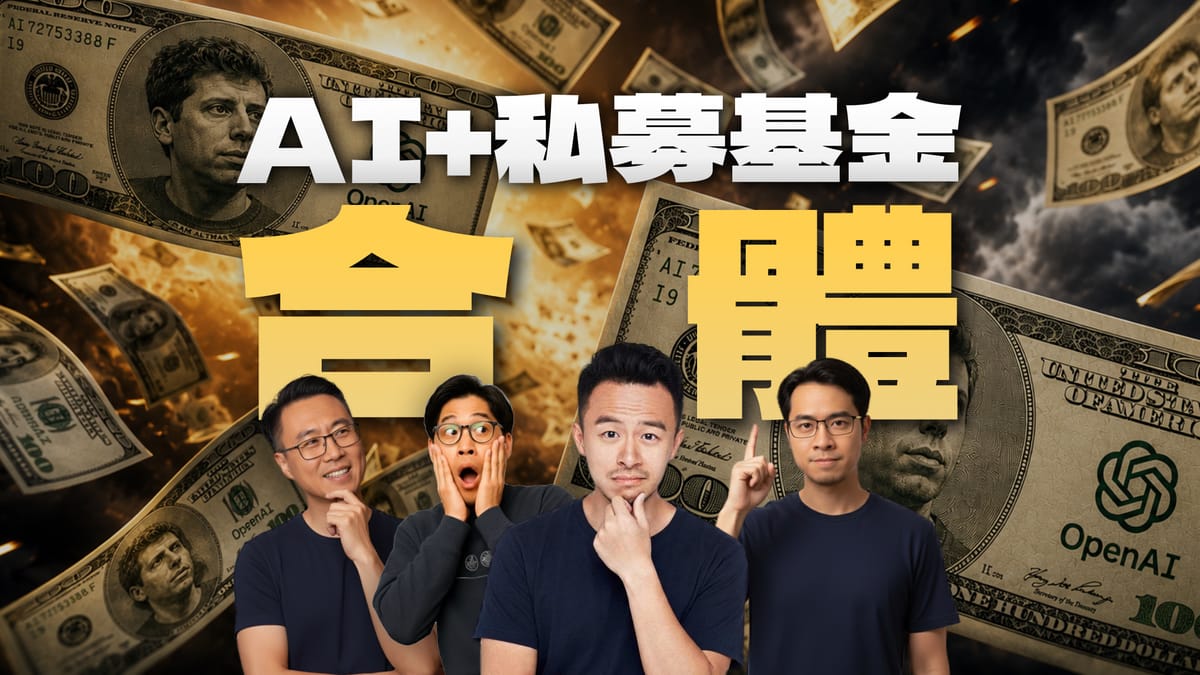
On the same day, sworn enemies OpenAI and Anthropic both walked down the aisle with different PE tycoons. Picture a wedding hall: two couples exchanging vows on opposite sides, each trying to out-smile the other while handing out candy at the door.
But this is no feel-good partnership. Behind the smiles lurks a toxic business ploy: grab control of legacy cash flow for pocket change. In the end, the crown princes of AI have stumbled onto the same “on-site body shop” road China’s SaaS sector has worn ragged for years.
What goes around, comes around—who knew the joke would be on them?
Think about it: North America spent thirty years preaching product-led SaaS, only to have AI yank it straight back to China-style outsourcing. Today we strip the OpenAI-PE alliance down to its underwear.
Pay pennies, grab the whole pot—what kind of Jedi move is that?
How did they pull it off?
Easy. OpenAI first rounded up every brand-name PE firm you’ve heard of—TPG, Bain Capital, the works.
Then they said: let’s set up a joint venture. You guys bring the big bucks, we’ll toss in spare change. Result: OpenAI coughs up $500 million; the PE crowd throws in tens of billions.
Translation: tiny cash, gigantic shell.
Fleece the sheep while it’s still wearing its own wool—classic.
Why would OpenAI do this—charity? Imagine them knocking on Farmer John’s door solo. The CEO would slam it yelling, “Scam artist, get lost!”
But when the PE boss already owns the board seats? No sales pitch needed—just a shareholder vote. Cost of sales drops 100 %. No persuasion, just coercion: take our AI or we’ll token-bomb you.
Even sweeter, OpenAI dangled a 17.5 % guaranteed return. If the venture flops, how do they pay up? Option one: hand over stock worth hundreds of billions. Option two: settle in… API credits. “Forget the cash—keep burning through our models until your credits hit zero.”
It’s the Cyberpunk version of daylight robbery—swap a few keystrokes for the cash flow of hundreds of real-world companies.
Can “shock-therapy” for legacy industry actually work?
Two steps.
Step one: buy a bunch of Accenture-style IT-outsourcing and consulting shops. Yesterday they taught you to upload Excel into Salesforce. Today? “Forget SaaS—kill Salesforce, kill the cloud. From now on it’s Codex everything.”
Employees show up to a blank chatbox. No “decline” button—always accept. Skip digitization, jump straight to AI-ization. Brainwash the boss later.
Step two: flood the zone with “on-site engineers.” In the U.S. these used to cost a fortune; now one agent-jockey handles ten clients, copy-pasting prompts between Slack windows. The math suddenly works.
Palantir already proved the model on the freaking Pentagon—if that bureaucratic beast can be bent to an on-site rewrite, any PE portfolio company can.
But don’t picture these engineers as caped saviors. A year ago you wrangled Cursor; today you coax Claude; next year the model du jour will dig the trenches for them—while quietly plotting to bury them. The best engineers are already glorified janitors mopping up after LLMs.
Back to China-style body shops—who ends up holding the muddy bucket?
This “perfect” logic inevitably sinks into the swamp of Chinese-style on-site outsourcing.
Alex Xiu did this gig back in his product-manager days: drag a top-tier engineer into a warehouse closet for a month of white-board slavery. You’re neither family at HQ nor staff on site—just a ghost paid in take-out while both sides guard their data like state secrets.
Everyone sits around a banquet table, but the first course isn’t collaboration—it’s paranoia. Each side strips off one layer after another until almost nothing is left.
Legacy bosses aren’t stupid; they’ll white-glove both OpenAI and Anthropic, hoping to play them off each other. Months of architecture theater, two months of actual coding, then the star engineers jump ship with the sweet know-how, leaving a leaking hull behind.
A naked grab for capital and data
This PE–frontier-lab marriage isn’t about democratizing tech; it’s a raw asset-and-data heist.
Who wins? The platform pockets a universal playbook and an ocean of token consumption. PE funds juice portfolio valuations and prep their exit. Stuck in the middle: legacy firms forced to “reform,” plus burned-out on-site prompt jockeys wiping the model’s butt.
In a pure free market, if you can’t create higher efficiency you’re ballast—ripe for “clearance.” Employee headcount and decades-old data sets are simply fuel for the bonfire. Call it “industry revolution” if you want; it smells like a data laundry day.
As a card-carrying AI optimist, I believe in a year one engineer will sip coffee, hit enter, and the rewrite will be done—assuming the locals haven’t knifed him in a turf war first.