Mid-Year AI Awards 2025: The Winners, the Burnouts and the Ones Who Already Feel Vintage
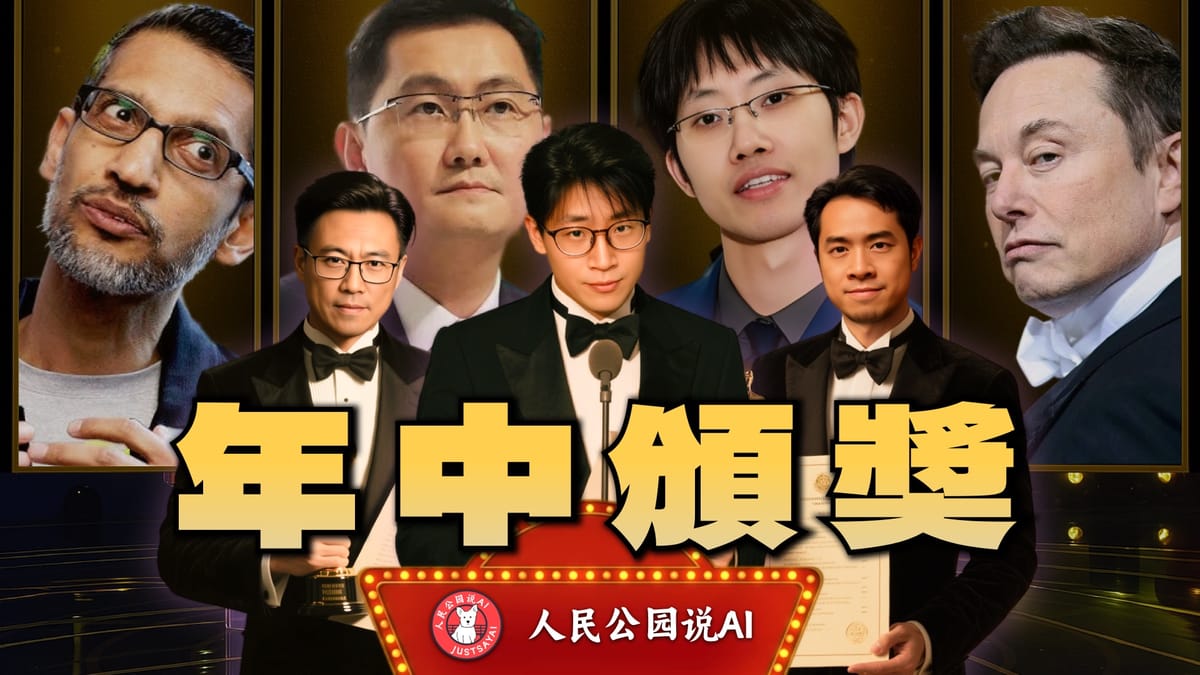
Wait until December and every trophy goes to a relic. That’s 2025 AI: move monthly or be erased. So we’re cutting the year in half and handing out the hardware while the winners are still recognizable.
Watch or listen here.
Best Product: Gemini — Not the Smartest, Just the One That Does the Dishes
If you can pick only one, it’s Gemini.
I roast Google’s UX daily, yet I open Gemini every morning. The interface is a mess, but the context window is 10× the competition—and that single spec turns the model from demo into coworker.
Feed it a 60-minute podcast transcript and ask for a one-pager. Everyone else hits the token wall and hallucinates the ending; Gemini finishes the job. The magic isn’t length—it’s finding the needle in a million-token haystack. Deep Research mode now crawls hundreds of sites and spits back a sourced, graduate-level report. My actual AI usage has 5×’d since I stopped fighting truncation.
Best product isn’t the flashiest; it’s the one you can’t fire because it quietly does the grunt work.
Best Team: DeepSeek — The Nobody Who Reverse-Engineered the Nine Yin Manual
Enter DeepSeek: the Zhang Wuji of 2025. No BAT pedigree, no celebrity founder, just a garage crew that read OpenAI’s footnotes, realized they were misdirection, and trained a frontier model on pocket change—then open-sourced the weights.
Baidu, Tencent, half of Zhongguancun are now running forks of their code. Proof you don’t need a billion-dollar cluster to move the field; you need conviction and a tolerance for being told you’re doing it wrong.
Best CEO: Liang Wenfeng — The Quiet Rich Guy Who Said Nothing and Won
Same story, smaller spotlight. Search Liang Wenfeng and you get AI-generated interviews—because he’s never given a real one. While rivals chase microphones, he bankrolls a pure research shop burning eight-figure RMB a year for the hell of it.
Compare that to Zuck’s casino-style talent raids. One bets the house; one bought the house and never posted about it.
Biggest Upset: Grok — How to Hack the Leaderboard with a Waifu
Two-year-old Grok is now valued second only to OpenAI. Engineering? Brute-force cluster scaling. Moat? A flirty anime girlfriend that topped Japan’s App Store overnight.
No new architecture—just a shameless, surgically precise strike at human loneliness. While incumbents chased MMLU, Grok chased serotonin. Sometimes the best model is the one that remembers your birthday and calls you “senpai.”
Most Controversial: Manus — The $75 M “Ghost and Coast”
Launch → invite codes scalped at $1,400 → close Series A → fire two-thirds of staff → relocate to Singapore in six weeks. Twitter calls it “bucket-run cowardice.” Founders call it survival.
China’s AI-app scene rewards infrastructure plays, not wrappers; USD funds want Delaware C-corps. If you’re pure application layer, you pack your repo and you move. Ugly, rational, and the new normal.
Epilogue: No Eternal Kings
Six months is a geological era in AI. Today’s gem is tomorrow’s antique. Even Kai-Fu Lee cashed out his model team at the top and pivoted to brick-and-mortar implementation services—boring, lucrative, prophecy.
And the unanimous dunce cap? Apple AI—still waiting for its invitation to its own show.
Adapted from People’s Park Talks AI
👉 Get the daily AI Daily Brief (two issues, audio included) – VPN required
Follow us:
📺 Bilibili: CallMeXiaoSu
📕 Xiaohongshu: People’s Park Talks AI
▶️ YouTube: People’s Park Talks AI