Tesla’s World Simulator Learns 500 Years of Driving a Day—But Can It Save Musk?
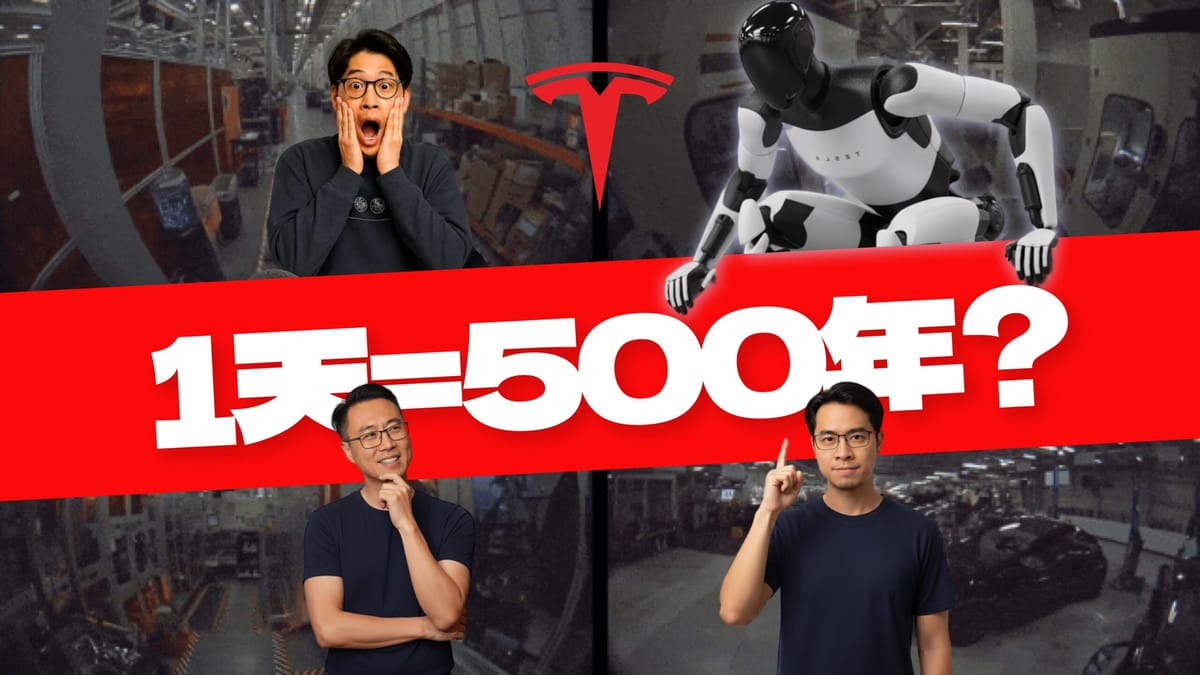
If I told you Tesla’s AI digests 500 years of human driving experience in a single day, would you swear AGI is knocking? That jaw-drop moment came from Tesla’s VP of AI, Ashok Elluswamy: an end-to-end net that swallows 2 billion tokens per second—video, audio, IMU, radar—then exhales just two: steering angle and pedal position. A 100-million-fold compression. “Compression is intelligence” taken to its logical extreme.
But the story just hit its biggest bug. Q3 earnings were ugly—net profit nearly halved. Worse, the narrative chain snaps at “robot.” Musk’s promised hand-off from Full Self-Driving to Optimus isn’t a seam; it’s a canyon.
How FSD’s “world simulator” sees second-order chaos
Old-school autonomy is a game of telephone: perception → planning → control. Each hop is lossy; errors compound. Tesla’s new stack reasons like a physics engine. Example: on a highway FSD spots a car swerving before the human does, pre-brakes, and predicts the vehicle will ricochet off the guardrail back into its lane. The system learned that by dreaming millions of parallel universes inside its world simulator—an end-to-end generative model that hallucinates eight-camera video conditioned on any steering command. Rule-based code can’t enumerate that combinatorial explosion, so Tesla torched the pipeline.
The fracture: Optimus can’t thread a bolt
Cars are closed-loop; robots are not. Ashok claims the same simulator “seamlessly” ports to bipeds. Reality disagrees. The lead engineer for Optimus just quit—reportedly over the dexterous hand. Musk’s first-principle insistence on human-level fingers so the bot can use our tools is elegant, but evolution spent 400 million years on that hardware. Even Boston Dynamics settled for a three-finger gripper. Meanwhile, Tesla’s prototype still fumbles with a socket wrench.
Tech and market are both unproven—the narrative breakpoint. The deadlier bug: Musk is funding an AI-and-robot moonshot with the 5-6 % net margin of a car factory. The halfway product—Robotaxi—remains regulatory gridlock.
A $1 trillion ultimatum
Musk is done waiting. Next month shareholders must re-approve his $100B pay package or, he hints, he walks to xAI and SpaceX. At the 2024 shareholder meeting he pitched Optimus as the path to a $25 trillion market cap. Norway’s sovereign-wealth fund—one of Tesla’s largest outside investors—already plans to vote no.
If Musk loses, the trillion-dollar aura evaporates. A Tim Cook-style operator steps in, slashes R&D, optimizes supply chains, and turns Tesla into a profitable but boring energy-and-auto conglomerate—Apple without the mystique.
If Musk wins, shareholders strap in, cash-flow becomes rocket fuel, and the bet is pure AGI—either Optimus scales or it doesn’t.
Some days I wonder whether Tesla sans Musk might actually live longer—no more founder-induced whiplash, just a focused smart-car company. But where’s the fun in that? Confucius never said it, yet it fits: better to die trying than to die waiting.