
Meta’s $14B Scale AI Buy: Desperation Move or Data Empire Gambit?
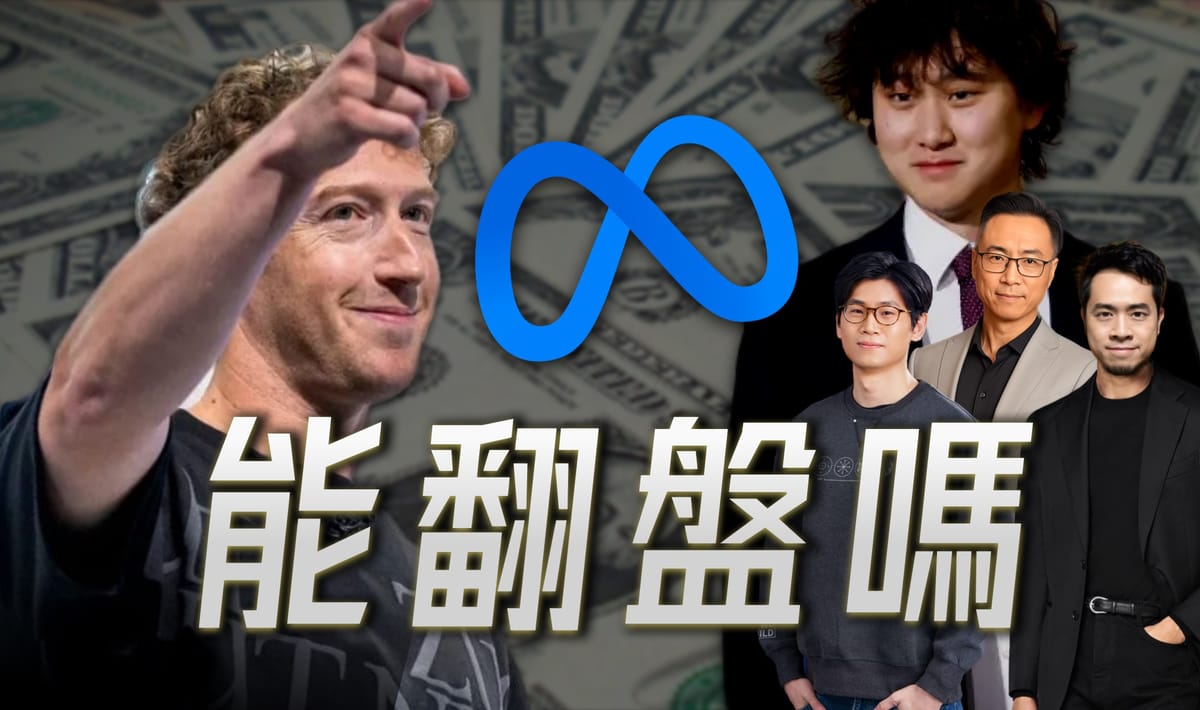
Let’s call it what it is: Zuck is panicking. His ad engine—97 % of revenue—is being eaten alive by TikTok. The metaverse punch-line has already cost him $50 B and counting. And the open-source lifeboat he christened Llama is taking on water fast. Three converging nightmares leave him one blunt weapon: buy the supply chain.
The death of Llama
To see why the price tag is so obscene, rewind to Llama’s birth. Meta marketed it as open-source, yet the license hid a rat’s nest of caps, user thresholds, and a blacklist that named OpenAI and Google outright. That’s not open; that’s open-washing. The community never bought in, so every new release—Llama 3, Llama 4—fell further behind DeepSeek and Qwen. Llama became the bloat king: big parameters, small brains, zero trust. When the model hits a dead end, the only move left is to own the blood supply: data.
Flipping the table
Picture the AI race as a mah-jong table. OpenAI, Google, Microsoft and Meta are slamming tiles, while Scale AI is the waitress serving tea to everyone—she knows who likes it hot, who needs it sweet. Suddenly the player losing hardest—Meta—stands up and buys the waitress. The rest of the table freaks out: “Poisoned tea?” Contracts are ripped up overnight. Better safe than back-doored.
That panic is the product. For $14 B, Zuck didn’t just acquire a labeling shop; he detonated a supply-chain scare that forces every rival to rewire their data pipelines. If I can’t climb to the penthouse of AGI, I’ll blow up the foundation and make you all rebuild.
The real bet: when human data runs out
Richard Sutton’s “Bitter Lesson” is gospel in the valley: scale and compute beat human priors every time. AlphaGo’s supernatural Move 37 came from self-play, not centuries of Go textbooks. By 2024 the industry is hitting the wall—high-quality human tokens are basically gone. Meta’s 3-billion-user fire hose? Mostly noise, outrage and emoji. Garbage in, garbage out.
So Meta isn’t buying Scale’s labeled photos; it’s buying the refinery. The industrial pipeline that can turn tomorrow’s oceans of synthetic experience—agent simulations, robotics logs, multimodal self-play—into high-octane training fuel. That’s the only feedstock that matters once human demos dry up. Zuck wants the oil wells and the cracking plant before anyone else figures out they need them.
The pragmatist’s last Hail Mary
History rhymes. Instagram and WhatsApp bought him a mobile decade. Oculus was supposed to buy the metaverse; instead it bought a meme. Now AI is the final exam, and he’s reaching for the same cheat code—write a gigantic check. But this time he’s not acquiring a product, he’s acquiring a probability distribution around future data. The upside is existential survival; the downside is a $14 B write-down and an antitrust lawsuit that makes the Meta break-up cartoons look quaint.
So do you bet on Zuck’s present or his future?
I’m neutral-to-bearish. The culture is still top-down, the open-source gesture is half-hearted, and the product compass spins daily. But the chips—compute, cash, talent, and now data infrastructure—are stacked in front of him. The question investors can’t dodge is the one his own CFO dodges on every earnings call: Are we paying for the company you are, or the empire you might become?
View distilled from my podcast People’s Park Talks AI
👉 Get the AI Daily Brief—two emails a day, one-click audio (VPN required).
Follow us:
📺 Bilibili: JustCallMeXiaoSu
📕 Xiaohongshu: People’s Park Talks AI
▶️ YouTube: People’s Park Talks AI